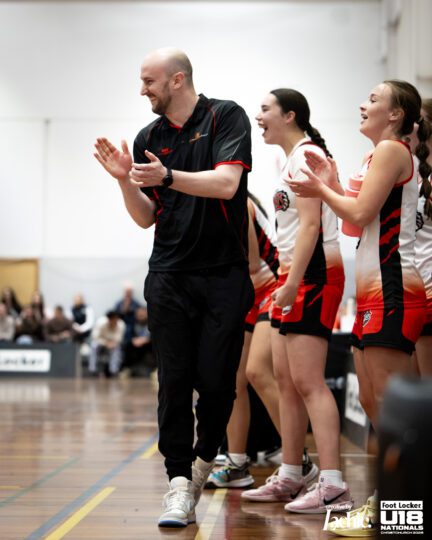
 All Canterbury Basketball Association Coaches, whether apprentice coaches or Head Coaches are part of a coaching community committed to development. We coach not just to develop the basketball abilities of players, but to continually develop ourselves, the character of players and the quality of our team’s environment.
What we coach is based around the CBA style of play (SOP) that is consistent from junior ranks through to senior representative teams and will prepare players for high levels of basketball.
We aim to develop well rounded players who can instinctively solve problems under pressure and have skill sets unrestricted by their size and “position.”
To do this we use the evidence backed coaching method of games based practice based on Transforming Basketball’s approach. SOP can be found here.
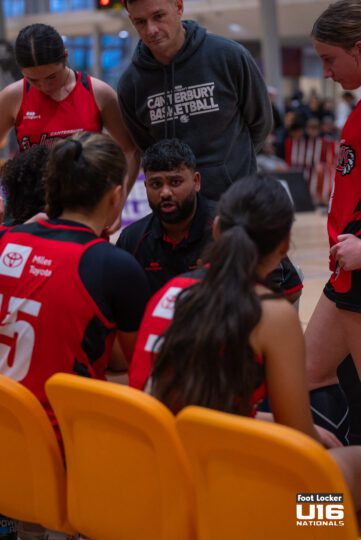
Why: Values-Driven Approach
- Coaches buy-in to the programmes purpose of developing GREAT TEAMMATES.
- Coaches know their “why” and prioritize learning their players “why.”
- These values guide decision-making and interactions with players.
How: Relationship-Focused Coaching
Connection before correction:
- Coaches build strong relationships with players.
- Understand individual needs, aspirations, and challenges.
- Foster trust and use this as a foundation to have difficult conversations and deliver effective feedback.
- Clearly define roles for players, coaches, managers, and parents.
- Everyone understands their responsibilities.
- These roles all fit the purpose of the team.
-
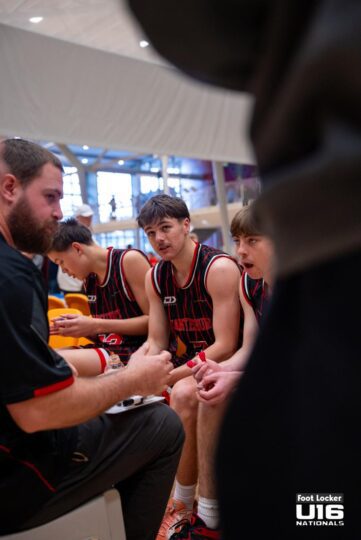 Embrace difficult conversations:
- Development cannot occur without well effective, honest feedback.
- To be honest without being nice is cruel.
- To be nice without being honest is manipulative.
- Have difficult conversations EARLY if players or coaches’ values, goals or behaviours are antithetical to the teams’ values. Conflict delayed is conflict multiplied.
- Emphasize player development and quality development process rather than outcomes and results.
- Celebrate growth, effort, and learning experiences.
-
Games and Constraints-Based Practice:
- Use game-like scenarios with specific rules (constraints).
- Encourage decision-making, creativity, and adaptability.
- Modify games appropriate to the age and stage of your team
-
High Engagement and Time on Task:
- Keep practices dynamic, fun and engaging.
- Minimize downtime; maximize active participation.
-
Thoughtful Push and Pull Feedback:
- Provide constructive feedback (push) to improve skills.
- Encourage self-reflection and player input (pull).
GROW Questioning Framework
The GROW framework is a simple tool that helps coaches ask effective questions, encouraging athletes to think, reflect and find their own solutions.
- G – Goal: What are you trying to do?
- R – Reality: What is happening now?
- O – Options: What could you do?
- W – Will: What will you do?
GROW can also be used when mentoring coaches, helping them reflect on their coaching and identify their own solutions and next steps.
-
Whole-Part-Whole Approach: 
- Start with a game-like situation (whole).
- Break down specific skills or tactics (part).
- Reintegrate into a game context (whole).
What: Canterbury Basketball Association Style of Play
CBA’s style of play is couched in our values of being Great Teammates. A more elaborated version of our values is below:
Values
The CBA representative programme values Great Teammates. Great Teammates:
Have a team first mentality,
Are hard workers,
Are strong listeners,
Work well with others, and
Have a “Next Play Mentality.”
All players must demonstrate these values to be selected for a team and will be held to these values throughout all programmes.
(Note: the below is the senior (U18 and above) SOP and coaches will simplify at younger levels)
Offence
Over Arching Philosophy: Take quality uncontested shots when they are available whilst making opponents defence work as hard and for as much time as possible (wear them out)
PACE PHASE 1st 6- 8 Seconds
Quality shot in Pace Phase =
- Wide open layup,
- On-balance contested layup with an advantage (size, positional, space),
- Wide open 3 point shot for 40%+ shooter with rebounders
Skills and Points of Emphasis
- Bust outs / high outlets / kick ahead passes
- Running responsibilities – wide lane runners / rim runner / trail (positionless transition)
- Attack the rim aggressively for lay ups
- Get fouled and get to the free throw line
- Kick ahead corner 3’s and kickout 3’s
- Do not take bad shots, instead create advantages for phase 2
SPACE PHASE Middle 8 Seconds
Quality shot in Space Phase =
- Wide open layup,
- On-balance contested layup with an advantage (size, positional, space),
- Wide open 3 point shot for 40%+ shooter with rebounders
- Cutters and screeners create space
- Pass penetration – hit cutters and posts
- Quick, effective ball movement move over the split line and drawing help defence and creating opportunities for teammates
- Create advantage with 2 or 3 man actions
- No off-ball stagnation (always move off ball)
- Receiver principles on dribble penetration
- Shoot uncontested shots out of offence
CREATE PHASE Last 8 Seconds
Quality shot in create phase =
- Wide open layup,
- On-balance contested layup with an advantage (size, positional, space),
- Wide open 3 point shot for 30%+ shooter with rebounders,
- Open mid-range shot.
- Mindset = great time to score (don’t panic)
- Create 2v1 advantages out of planned actions
- Aggressive dribble penetration
- Get two feet in the paint
- Get fouled and get to the free throw line
- Receiver principles on dribble penetration
- Lay ups and uncontested kick out 3’s
DISCIPLINE
- Take on balance, uncontested shots
- Cut or screen away when guarded
Defence
Overarching philosophy: Apply pressure and make teams uncomfortable with the ball, force them into non-quality shots as per our offensive philosophy above and finish possessions by boxing out.
DEFENSIVE TRANSITION
- Mismatches do not hurt us, numbers advantage do
- Force opposition to box us out but do no overcommit on offensive glass and allow bust outs
- Jam Up / front foot forward defence – Guard who guards you – make them exert effort to get up the court into a poor position – Focus on taking away their dominant hand
- Early ball pressure and containment forcing ball handlers to pass and dribble with weak hand
- Take away kick ahead passes
- Flood the floor, off ball positioning
- Generate opportunistic pressure without gambling
HALF COURT DEFENCE
- Pressure the ball while containing it
- Absolutely no strong hand penetration
- Force offensive to use weak hand
- Communicate pick and rolls early and loud
- Have clear pick and roll language
- Show help, don’t provide help (one or two passes away)
- Present a crowd, narrow the floor
- Force the opposition out of rhythm, out of position, out of offence
- First close out shooting hand with mirror hand
- Second remove strong hand drive
- Third shade and force weak hand dribble or pass with no direct line drive
- Box out – watch the player NOT the ball or shot. Find you player early, make contact, get low and posh them out.
DISCIPLINE
- Demonstrate foul discipline- no hands fouls
- Wall up end of penetration – jump second
- Create contact with our bodies and take away space
- Compete for the rebound, be prepared to wrestle
- Win the possession game, no second possessions
